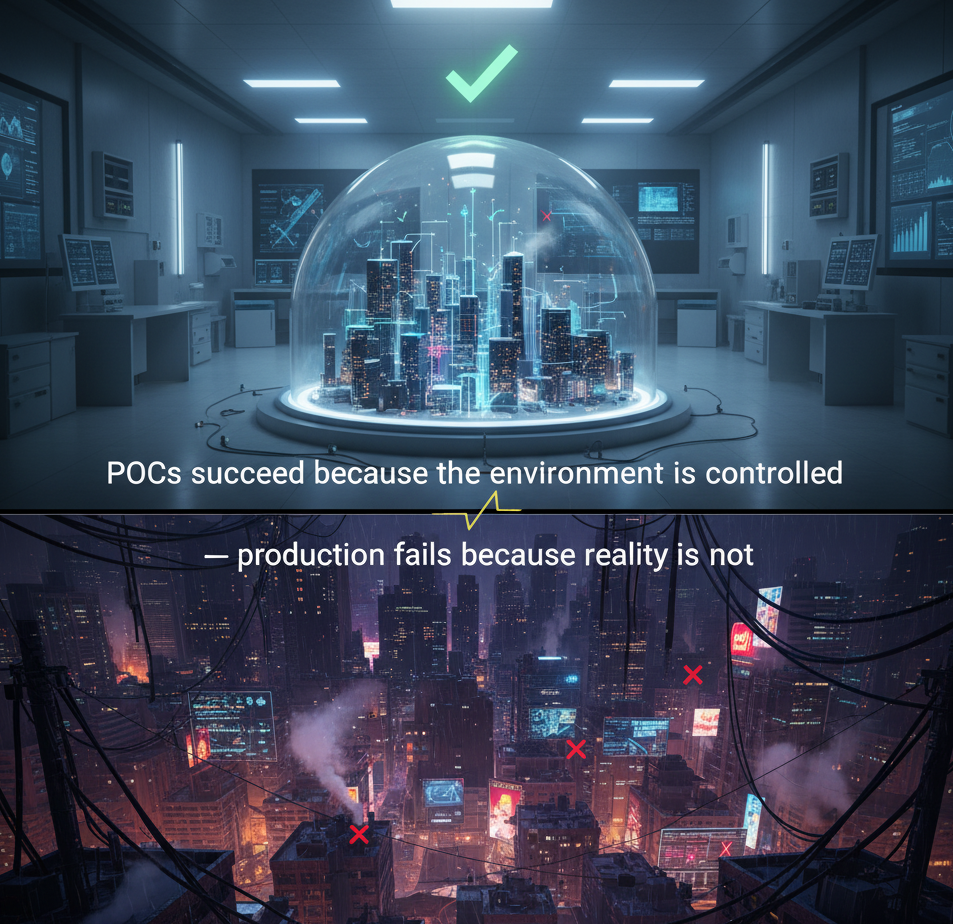
The POC Illusion: Why Your AI Prototype Works… But Your Production System Doesn’t

A POC always looks promising. It’s fast to build, lives inside a notebook, and uses cherry-picked documents. Every retrieval works, every answer looks smart, and everyone walks away thinking, “This is going to change everything.” But once you try scaling that prototype into production, the illusion disappears.

In production, your POC faces real traffic, real latency constraints, real edge cases, and real messy data. Documents change. Product names differ. Inputs get noisy. LLM responses vary. Suddenly the once-beautiful prototype turns brittle. And then the question arises: “Why doesn’t the POC work in real life?”

The truth is, cool tools don’t equal production systems. Building a scalable AI feature requires governance, monitoring, versioning, reliability, and data quality. This post explains why 90% of AI POCs die at the edge of production — and how companies can escape the POC trap entirely.

More Content

The POC Illusion: Why Your AI Prototype Works… But Your Production System Doesn’t

A POC always looks promising. It’s fast to build, lives inside a notebook, and uses cherry-picked documents. Every retrieval works, every answer looks smart, and everyone walks away thinking, “This is going to change everything.” But once you try scaling that prototype into production, the illusion disappears.

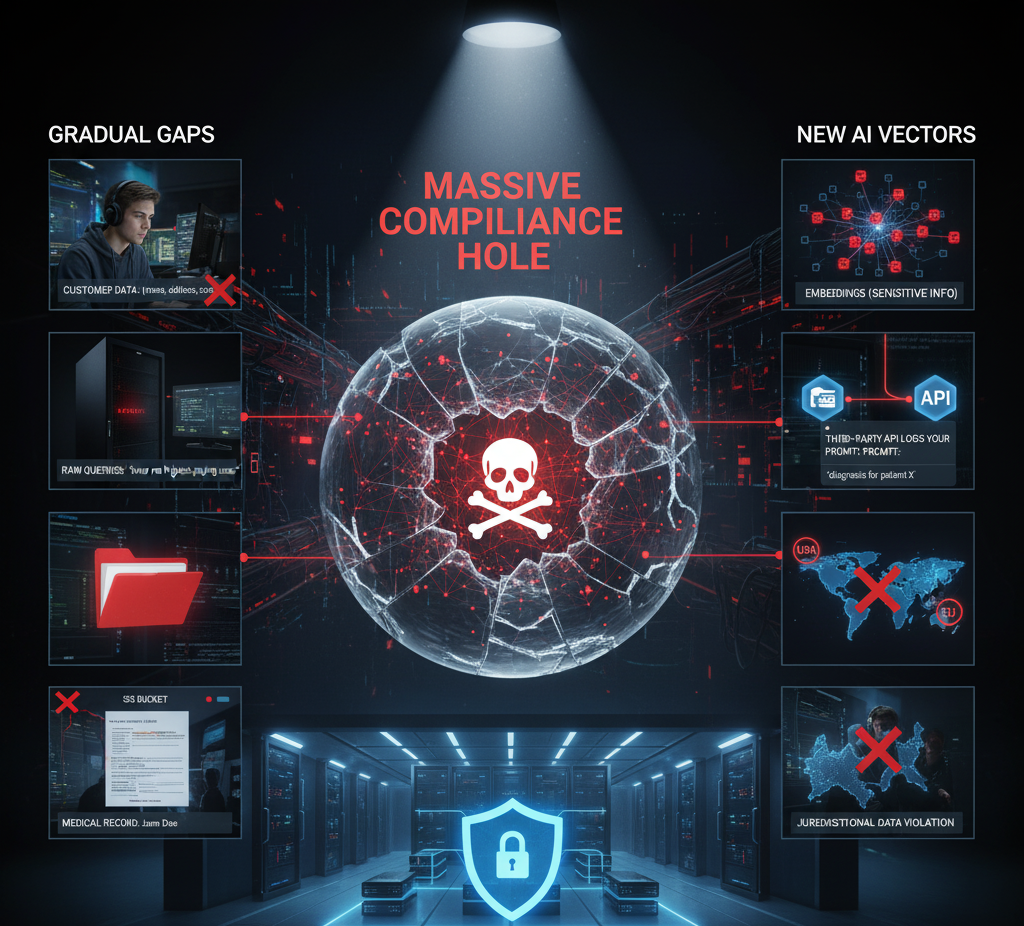
The Silent Risk: Compliance Doesn’t Break All at Once — It Breaks Quietly

Compliance gaps rarely show up as dramatic failures. Instead, they appear gradually. A junior engineer tests prompts using real customer data. An AI tool logs raw queries. A document stored in S3 isn’t masked properly. These small cracks compound until an audit exposes a massive compliance hole.

Death by Consultants: Why Buying Advice Doesn’t Build AI

Consultants flood companies with diagrams, frameworks, and strategy slides. They recommend best practices, list tools you should adopt, and show you what others have built. But consultants rarely stay long enough for the hard work — building infrastructure, fixing data inconsistencies, resolving hallucinations, or scaling pipelines.