
Blog
Featured Insights
The CTO’s AI Paradox: Build AI Fast… Without AI Engineers
Every CTO today is caught in a paradox. Boards and CEOs expect immediate AI innovation — smarter search, copilots, content generation, analytics automation — but the teams responsible for building these capabilities rarely have any ML or LLM specialists. Most organizations are staffed with excellent full-stack developers and backend engineers, but they’re not trained to architect retrieval systems, manage embeddings, or tune LLM reasoning.
AI Ambition vs. Reality: When Tech Debt Blocks Your AI Roadmap
Every company wants AI, but not every company is ready for AI. Years of accumulated tech debt — legacy codebases, brittle services, outdated documentation, and incompatible databases — create a minefield that slows innovation to a crawl. CTOs know exactly where the skeletons are hidden, but AI expectations don’t give them time to clean up before building new things.
AI on a Startup Budget: Why Most Companies Can’t Afford to Build AI
There is a myth that AI is cheap — that all you need is API access to an LLM. In reality, AI infrastructure is one of the most complex technical investments a company can make. You need a vector database, ingestion pipelines, embedding workflows, retrievers, verifiers, orchestrators, monitoring tools, evaluation frameworks, and more. Before you even launch your first AI feature, you’ve already sunk months of effort and significant spend.
Highlights
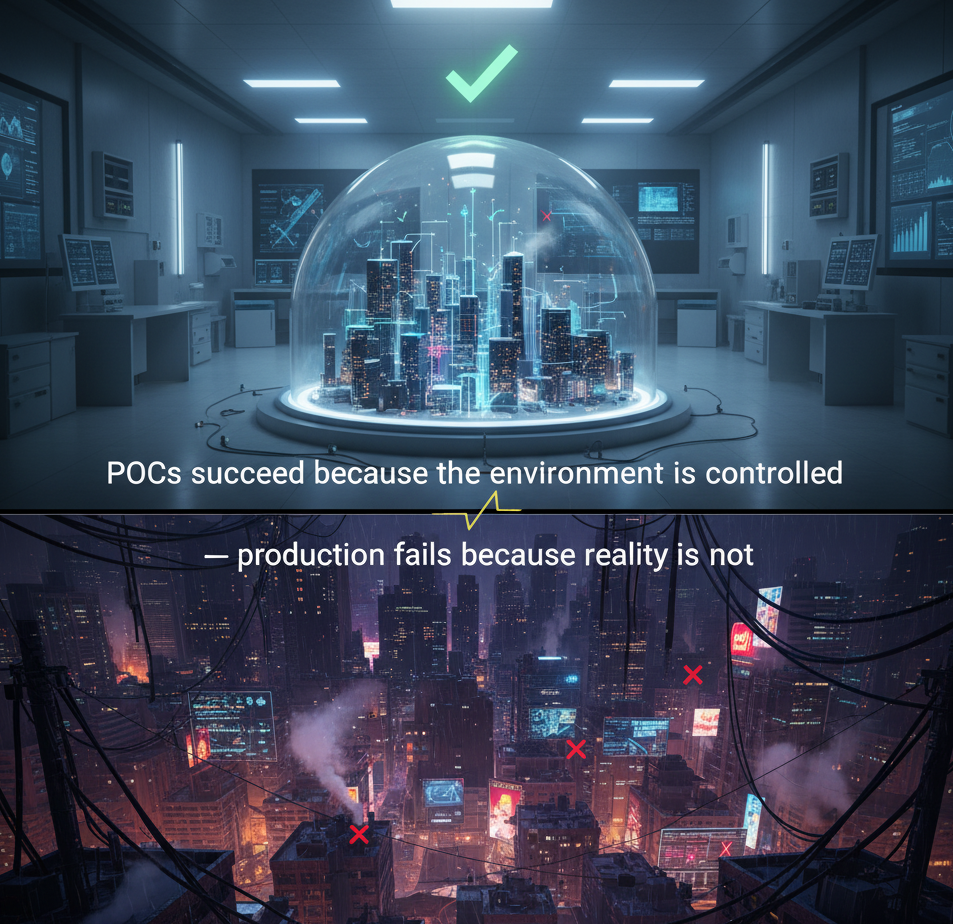
The POC Illusion: Why Your AI Prototype Works… But Your Production System Doesn’t
A POC always looks promising. It’s fast to build, lives inside a notebook, and uses cherry-picked documents. Every retrieval works, every answer looks smart, and everyone walks away thinking, “This is going to change everything.” But once you try scaling that prototype into production, the illusion disappears.
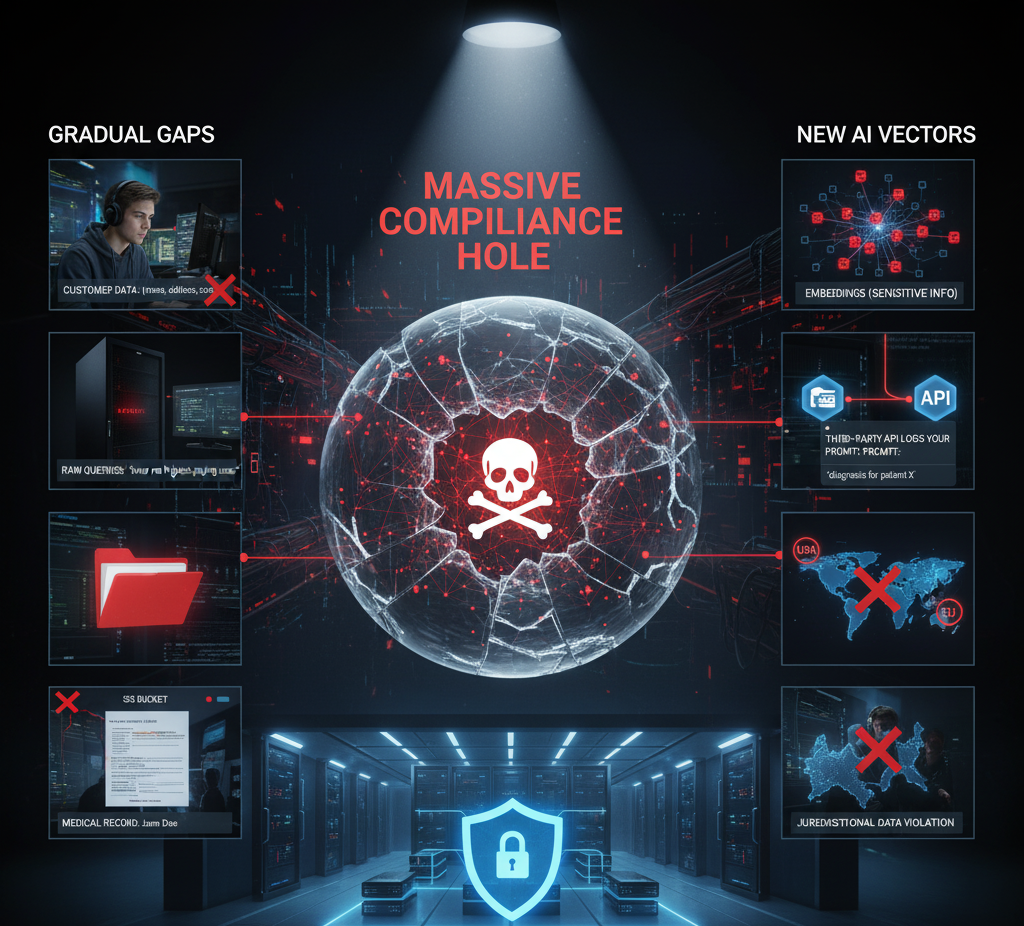
The Silent Risk: Compliance Doesn’t Break All at Once — It Breaks Quietly
Compliance gaps rarely show up as dramatic failures. Instead, they appear gradually. A junior engineer tests prompts using real customer data. An AI tool logs raw queries. A document stored in S3 isn’t masked properly. These small cracks compound until an audit exposes a massive compliance hole.

Death by Consultants: Why Buying Advice Doesn’t Build AI
Consultants flood companies with diagrams, frameworks, and strategy slides. They recommend best practices, list tools you should adopt, and show you what others have built. But consultants rarely stay long enough for the hard work — building infrastructure, fixing data inconsistencies, resolving hallucinations, or scaling pipelines.

If Your Data Leaves Your Cloud, Your AI Starts Behind
AI thrives when it learns from your institutional knowledge: your manuals, your contracts, your workflows, your customer cases. When that knowledge is kept inside your own infrastructure, your AI becomes a genuine competitive differentiator.

Your AI Gives Great Answers — To Someone Else’s Models
Every time your team sends private documents to a public AI provider, you are enriching an ecosystem that isn’t yours. Even with policies that claim “your data isn’t used for training,” signals still leak in the form of usage statistics, embeddings, routing data, or prompt structures.